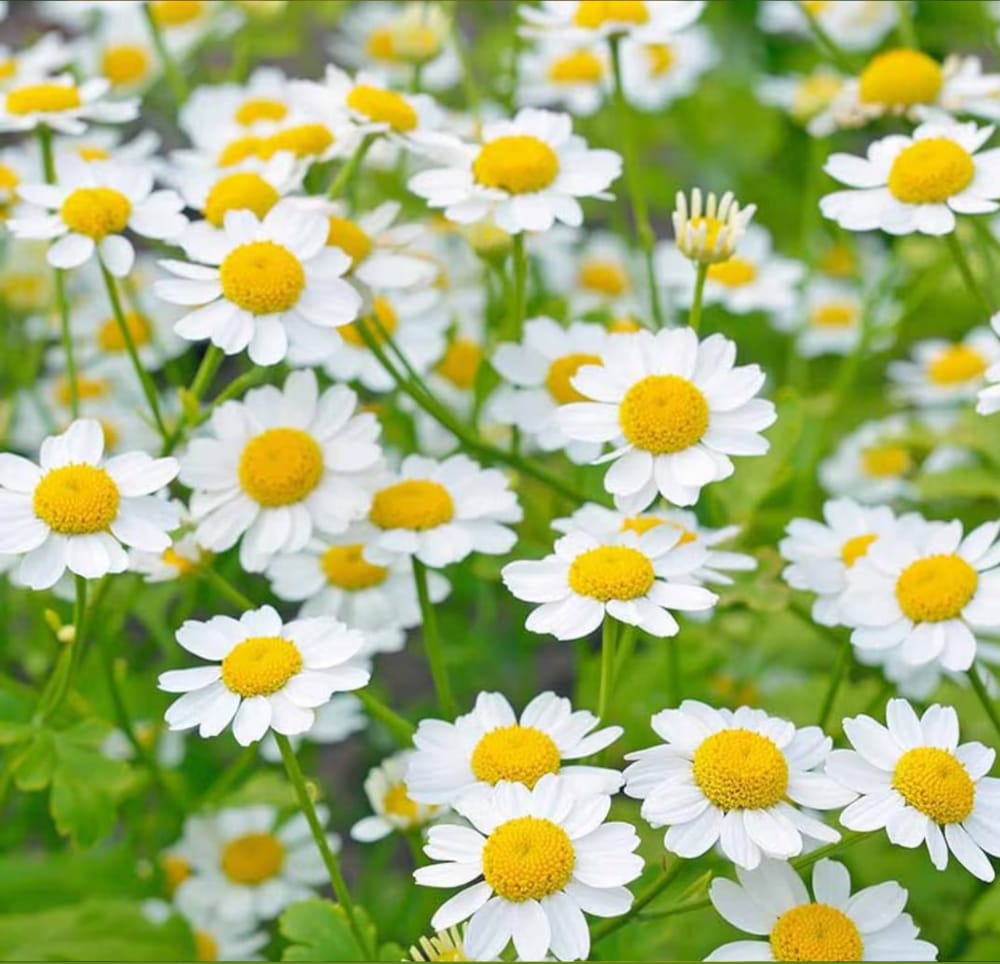
Feverfew: The Medieval Migraine Defender
By Arash Bozorgmehr
What is Feverfew?
Feverfew (Tanacetum parthenium, also called Chrysanthemum parthenium) goes by names like featherfew or bachelor’s buttons - this fragrant perennial belongs to the daisy family. Originally from southeast Europe and the Balkan region, it now grows wild in many areas of Europe, North America, and some South American zones, frequently spreading beyond gardens into roadside spots or unused land.
Standing between 30 and 90 centimeters high, its vivid green leaves are sharply divided and give off a lemony scent if broken. During warmer months through fall, it produces tight groups of tiny white blossoms featuring golden centers.
The fresh or dried upper plant parts - particularly the leaves - are collected when flowers first appear; this due to its historical use against fever. The term “febrifuge” comes from old views linking it to reducing high temperatures.
Potential Benefits of Feverfew: Centuries of Traditional Use
Feverfew's history spans two millennia, beginning in ancient Greece then moving through 1700s England. Though rooted in tradition, its use persisted across regions due to observed effects rather than scientific proof at the time.
Dioscorides recommended it to warm the body and calm inflammation, especially for joint issues or period discomfort. During medieval times, healers placed feverfew inside cushions to help with headaches while brewing potent infusions that lowered fevers and cleared impurities.
In Wales, doctors gave it to stimulate womb activity when menstruation was late or labor became painful.
By the 1600s, this plant had become the top choice against severe head pain - individuals often consumed raw foliage each day to stop attacks before they started.
For calming and stress relief, also check Lavender.
Applied on skin, it created mild irritation to distract from deeper aches like those caused by stiff joints or bug stings; when swallowed, its sharp bitterness aided digestion and fought intestinal parasites.
Feverfew in Medicine: What the Science Truly Says
Current studies mainly look at stopping migraines before they start.
High-quality randomised trials indicate feverfew leaf extract - standardized to 0.2% parthenolide or more - cuts migraine occurrence by 20–40%, while also reducing intensity, nausea, along with sound and light discomfort.
Although older research hinted at positive effects on arthritis, recent studies reveal no improvement compared to inactive treatments. Evidence from a 2011 Cochrane analysis together with subsequent reviews supports mild yet steady relief with daily use lasting 2–4 months.
The active components, like parthenolide plus related sesquiterpene lactones, block processes tied to migraines such as blood cell clumping, serotonin discharge, and inflammation triggers.
Some research suggests feverfew may help inflammation when applied to skin. However, it’s unclear if it lowers body temperature - its name might confuse users.
You can plant feverfew seeds and create your own heavenly backyard pharmacy. Get your hands on a kit of 10 medicinal herbal seeds and boost the health of you and your loved ones today!
How Much Feverfew Should You Take?
Just uniform leaf items deliver consistent results.
For migraine prevention: 50–100 mg of dried feverfew leaf standardized to 0.2–0.7 % parthenolide (typically 100–250 µg parthenolide) once or twice daily with food.
Fresh leaf: 1–3 medium leaves (about 50–150 mg) chewed or swallowed daily - start with one leaf to test tolerance.
Capsules/tablets: follow label for 0.2 % parthenolide standardization. Treatment must be continuous for at least 6–12 weeks to see full benefit. Do not stop abruptly - taper off over 1–2 weeks to avoid rebound headaches.
Who Should Avoid Feverfew?
Some people sensitive to plants like ragweed or chamomile might react badly - from sore mouths to serious skin issues or breathing trouble.
Women expecting a baby shouldn’t take high amounts since this herb has been used to start periods and may lead to pregnancy loss.
There’s no clear proof it's safe while nursing, so best not to use it then.
If you’re set for surgery, quit taking feverfew at least fourteen days before - it can slow clotting.
When using drugs such as warfarin or aspirin, stay cautious; mixing them could raise chances of bleeding.
Side Effects and Interactions of Feverfew
Fresh leaves chewed often lead to sores in the mouth, soreness on the tongue, or reduced taste for around 10–15% of people - using capsules helps skip these issues. Instead, some may feel slight stomach discomfort, acid reflux, or headaches if they stop abruptly.
It might raise the chance of bleeding if used alongside blood thinners. However, no major issues have been seen with triptans or common migraine treatments.
Key Takeaways
Feverfew (Tanacetum parthenium), once a staple in medieval medicine, now stands among the rare treatments backed by research for preventing migraines - using standardised leaf extract each day over several months may lower how often they occur and lessen their severity.
While historically used to reduce fever or ease joint pain, these uses aren't supported by current data.
It’s usually safe for most healthy adults, yet raw leaves may cause mouth irritation; quitting suddenly might lead to return headaches.
Key warnings include allergies to plants like daisies, being pregnant, having blood-related issues, or upcoming operations.
Migraine patients looking for an evidence-supported herbal option often find feverfew helpful - it works best when taken regularly using a tested formula.